
On May 7, 2026 the European Commission announced the nine hydrogen production projects under the third auction of the European Hydrogen Bank (EHB), providing almost 1.1 giga-watts of electrolyser capacity and producing over 1.3 million tonnes of hydrogen over their first 10 years of operation, with a 9 million tonnes of CO2 equivalent reduction.
The selected projects will receive a total of around €1.09 billion in EU funding from the Innovation Fund, sourced from the EU Emissions Trading System (ETS). The produced hydrogen will help reduce emissions from energy-intensive industries such as transport and chemicals. Spain and Germany are participating through the Auctions-as-a-Service feature, with €1.7 billion in national funds. Ge in addition Germany will support RFNBO hydrogen production with up to €1.3 billion, and Spain will contribute up to €440 million.
The auction awards successful projects with a subsidy to help cover the price difference between their production costs and the market price. The objective is to incentivise clean hydrogen production and use. Upon signature of their grant agreements, the nine selected projects will receive a fixed premium of between €0.57 and €3.49 per kilogramme of certified and verified hydrogen produced, for a maximum period of 10 years.
The two winners of the EU H2 Maritime/Aviation Auction were again in Norway:
| Project Name | Coordinator | Country | Bid Volume (hydrogen kilotonne over 10 years) | Bid Capacity (Megawatts electric) | Expected GHG avoidance* (kilotonnes of CO2 equivalent over 10 years) | Bid Price (EUR/kg) |
| Gen2-LH2 | Gen2 Energy AS | Norway | 17,886 | 12 MWe | 122.34 | €3.48 |
| RogalandH2 | GREEN H AS | Norway | 17,700 | 12.5 MWe | 121.07 | €3.49 |
Last year the Norwegian companies GreenH, Gen2 Energy, and Norwegian Hydrogen also won the first maritime auction receiving €96.6 million in EU support to produce renewable hydrogen in Rjukan, Mosjøen, and Hammerfest., with a subsidy of only between EUR 0.45 /kg to EUR 1.88 /kg.
Although green hydrogen production costs in Norway are one of the lowest in Europe, according to a recent DNV study Norway faces several dilemma’s: “sustaining energy exports, enabling green industrial growth, and deliveringrapid emissions cuts”. As Norway’s electricity demand is rising as datacentres are built and energy-intensive industries, transport, and petroleum operations electrify, environmental and nature concerns hamper new generation capacity and grid reinforcements. DNV forecasts therefore that Norway is moving into a power deficit in the early 2030s, relying on net imports even as the debate about price levels and interconnectors intensifies. Could exporting green hydrogen be a new income stream?
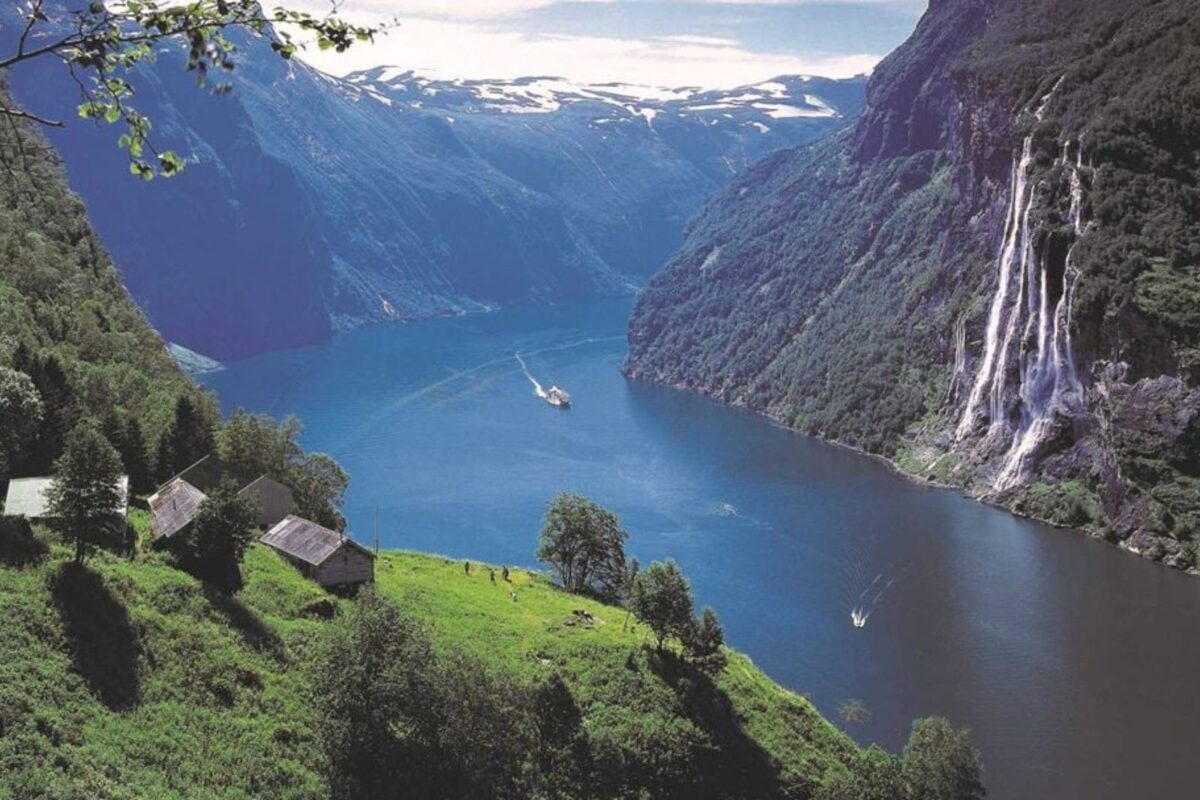
The Pilot-E project Hellesylt Hydrogen HUB (HHH) is demonstrating a complete green hydrogen delivery chain in the North Western region of Norway, changing from fossil to zero-emission fuel solutions for local industry, heavy-duty vehicles, ferries, cruise vessels, and high-speed vessels. With a daily production capacity of up to 1.3 tons of hydrogen, the Hellesylt Hydrogen Hub is currently one of Norway’s largest producers of green hydrogen. Opening in 2024, it supplies green hydrogen well ahead of the zero-emission mandate for the UNESCO World Heritage Geirangerfjord, which comes into effect in 2026.
Photo, courtesy Hellesylt Hydrogen Hub, Norway.