
As part of the European Technological Sovereignty Package, the Commission on June 3, 2026 published the Strategic Roadmap for Digitalisation and Artificial Intelligence (AI) in energy. As energy systems grow more dependent on digitalisation, with rising prices and geopolitical challenge industrial competitiveness, tech sovereignty in the energy sector is rapidly becoming part of EU’s new narrative as are solutions for intelligent energy centres next to “sustainable” data centres. So why is hydrogen not appearing at all in this “strategic” document?
The roadmap outlines the increasing energy demand of digital infrastructure and how AI can support a clean, competitive and secure EU energy system. Demand-side flexibility could reduce electricity costs for EU consumers by more than €71 billion per year, which equals a 64% reduction in electricity consumption costs. For industry, digitalisation can improve efficiency and make it easier to respond to price signals and thereby also reduce energy costs. AI-based operation and maintenance optimisation could save up to €94 billion ($110 billion) annually by 2035. Digital solutions integrated into the electricity grid can provide real-time visibility, interoperability and control, as it integrates more renewables. Yes, but how will this happen with sufficient grid balancing and storage intelligence?
“The energy system can no longer be viewed as a single connection to a single data centre,” said Lex Coors, President of the European Data Centre Association EUDCA. “Europe is moving into a more complex, four-dimensional environment where capacity, flexibility, sustainability and digital resilience must be planned together. Data centres are becoming part of the wider energy system, and this Declaration of Intent is an important step towards building that cooperation in a responsible and future-proof way.”
“Europe’s AI, cloud and digital ambitions will require significant new infrastructure capacity over the coming years. Delivering that growth responsibly will depend on much closer coordination between the digital infrastructure and energy sectors, “said Michael Winterson, Secretary General of EUDCA. “This Declaration of Intent shows our commitment to partner with energy providers, local authorities and wider EU institutions to deliver on advanced technologies, energy, and sustainability ambitions.”
The declaration provides for the establishment of working clusters focusing on identified priorities: planning, forecast and connection agreements, flexibility, energy generation and storage (ahaa!). So is there not not somebody missing in this list of signatories of the Declaration of Intent?
CurrENT Europe (CurrENT), E.DSO for Smart Grids (E.DSO), Energy Storage Europe, EU DSO Entity (DSO Entity), Eurelectric, Euroheat & Power (EHP), the European Association of the Electricity Transmission and Distribution Equipment and Services Industry (T&D Europe), the European Data Centre Association (EUDCA), the European Network of Transmission System Operators for Electricity (ENTSO-E), Flow Batteries Europe (FBE), GEODE – The voice of local energy distributors across Europe (GEODE), nucleareurope, SolarPower Europe (SPE), and WindEurope.
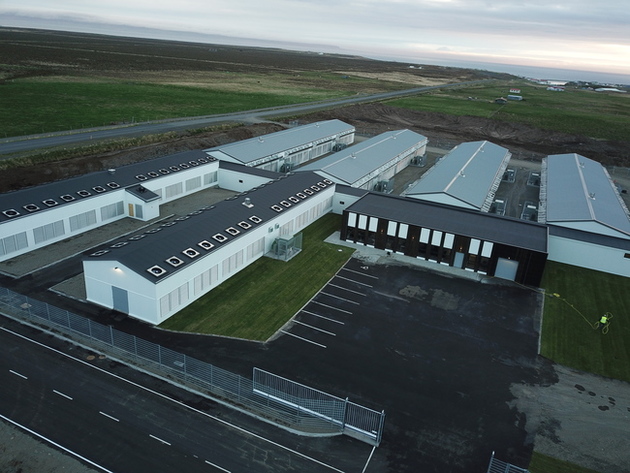
Photo: courtesy Blönduós Campus data center, Iceland