
A ‘Reflow call’ is a specific funding round that redistributes unused or released grant budgets. This typically occurs when earlier projects cost less than budgeted, or when they are cancelled ahead of schedule. A recent joint letter of a few European National Hydrogen Associations flagged current issues after the third European Hydrogen Bank (EHB) Auction the re-investment in some of the key industries where Europe has strong resilience and decarbonisation goals: steel, fertiliser, and fuel for the maritime and aviation sectors.
The letter states that although the auctions had great subscription success with the third auction requests exceeding the funding by six times, the use of available funding has shown many unexpected withdrawals during the signature process of selected projects. The signatories welcome therefore the strengthened guarantee and credibility criteria as they seem “to be essential to ensure
that the EHB can effectively support credible projects and contribute to building a robust European hydrogen industry.
However, the letter also states that “the entry into operation requirement should thus be applied with more flexibility when delays stem from external factors, such as the member states delayed transposition and implementation of the RED III regulation. Plus timely financial backing…..
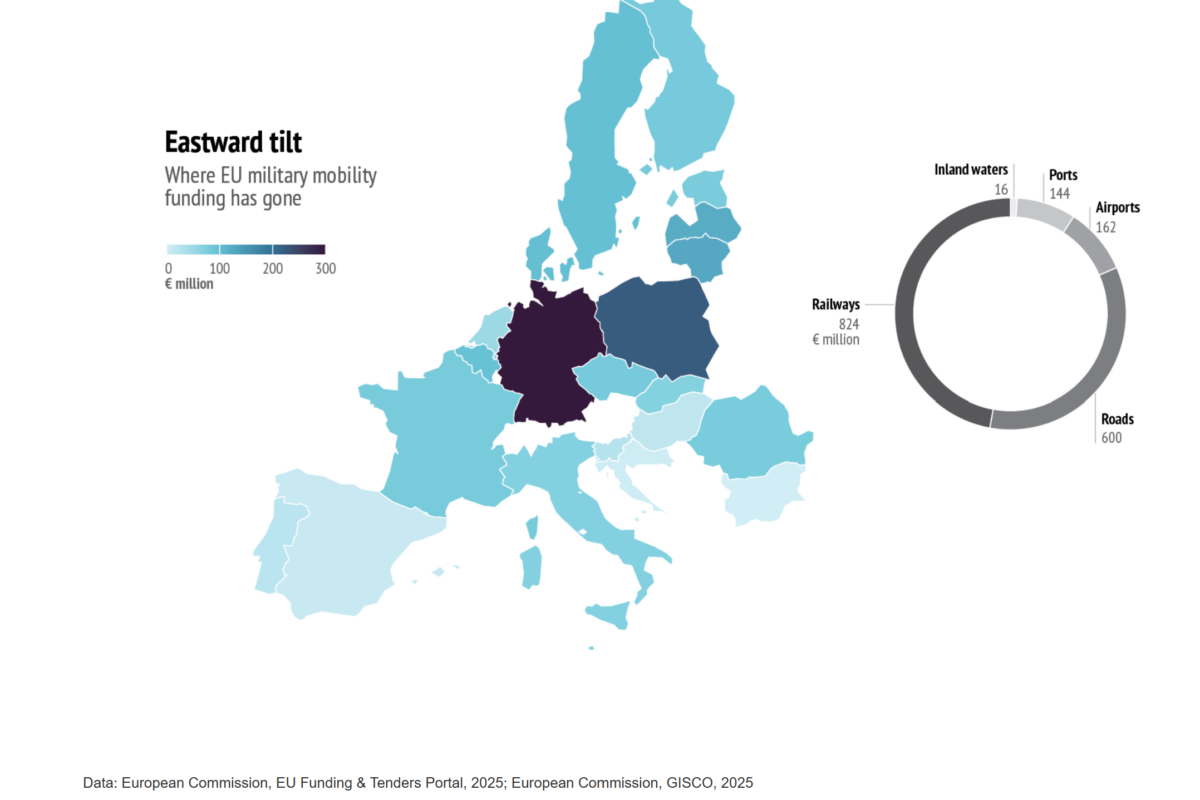
The CEF Transport programme opened its last ‘Reflow call’ of the current EU budget period, of approximately € 1.1 billion, on 18 June and closing 6 October 2026. These are the topics covered:
- Rail – high-speed lines, cross-border connections, missing links, and multimodal hubs with maritime and inland waterway transport.
- Waterways – infrastructure such as dams, weirs, bridges, and locks.
- Military mobility – dual-use projects involving multiple Member States will be given priority.
- Road transport – charging infrastructure and energy storage for the decarbonisation of freight transport.
- Aviation – electrification of ground operations at airports.
- Seaports, inland ports, and vessels – shore-side electricity supply and adaptation of vessels for clean fuels, including electric.
- Autonomous driving – control centres for real-world testing and roadside equipment for automated data exchange.
- EU external borders – improvement of existing border crossings.
Of the total budget, € 260 million is reserved for cohesion countries and € 130 million for military mobility. The maximum grant per project ranges from € 10 million to € 100 million, depending on the priority and the number of member states involved.