
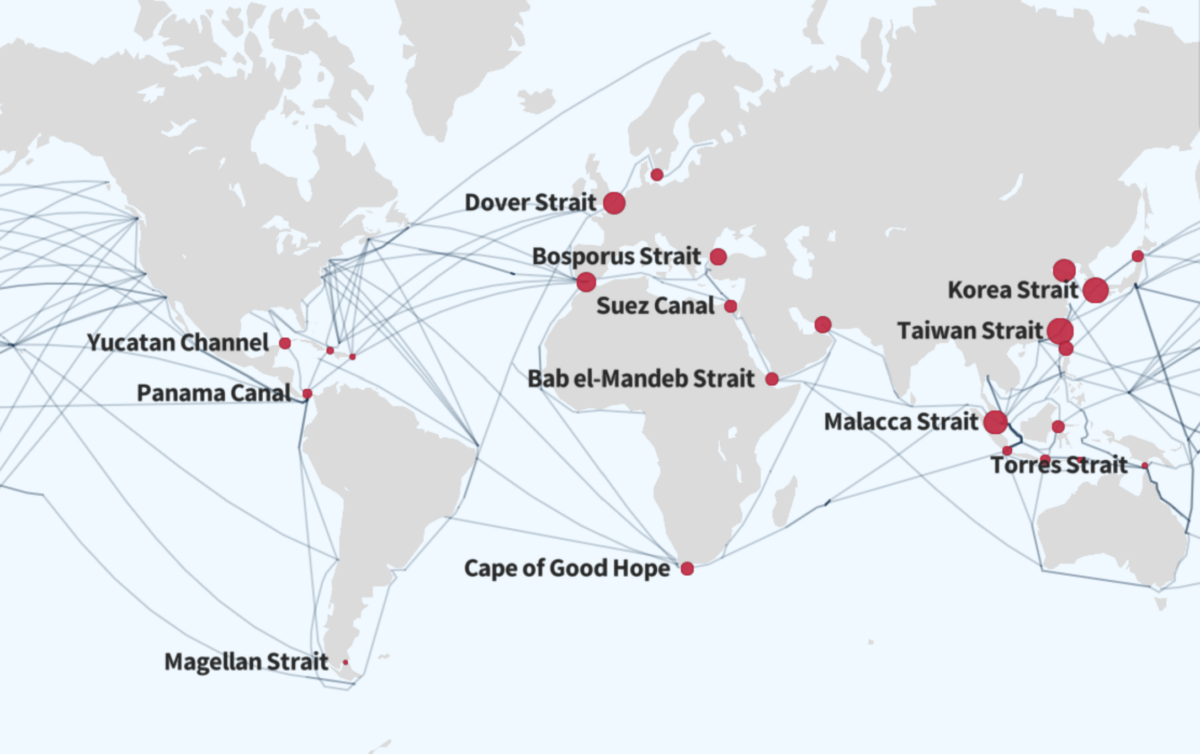
After the US and Isreael started airstrikes on Iran on February 28, 2026, the direct affect on global oil distribution and subsequent rise in oil prices has been dominating the news. Although the affect of rising oil prices has re-ignited flawing political interest in clean alternatives, the direct affect of the bloccade of the Street of Hormuz on hydrogen developments has not been wildly discussed.
The World Economic Forum (WEF) recently listed risks to hydrogen project timelines and export infrastructure as the ninth commodity to be affected by the crisis, after ammonia and methanol. According to Platts (Energy), the Middle East is forecasted to produce 17.6 million mt of hydrogen by 2030, exporting 0.8 million mt of mostly low-carbon and renewable hydrogen. By 2040, the Middle East will be the fourth largest producer of clean hydrogen, behind the Asia-Pacific region, Europe and North America, with production projected at 9.1 million mt, exporting 2.4 million mt of low-carbon hydrogen. However, ongoing instability and uncertainty around shipping routes and hydrogen demand could slow the pace of development and the scale-up of production capacity according to WEF.
As Germany, Netherlands and Belgium are increasingly looking at importing hydrogen to fulfill potential demand, this new unforeseen political obstacle will require urgent rethinking of supply and demand pathways including “maxxing” local potential.