
Hamburg hosted one of the first uplifting events in Europe, after all the cold news, snow showering down on Europe at the beginning of 2026. The Hamburg declaration on January 26, 2026, uniting the Heads of State and Government of Belgium, Denmark, France, Germany, Ireland, Luxembourg, the Netherlands, Norway, and the United Kingdom, reaffirmed their ambition to transform the North Sea into the largest clean energy hub in the world, 300 GW offshore wind by 2050, strong interconnections and green hydrogen commitment to:
(8) A sufficient and affordable supply of low-carbon and renewable hydrogen and its derivatives can play an important role to support Europe’s industry in a climate-neutral future, maintaining global industrial leadership. With regard to the North Seas Region potential for offshore renewable and low-carbon hydrogen, we will work towards:
a. Facilitating development of projects combining offshore wind and hydrogen, cooperation with NSEC.
b. Encouraging the development of hydrogen production, transport and storage infrastructure as well as the associated supply chains, while building on a pragmatic regulatory framework and considering market driven supply and demand as well as other elements of the energy infrastructure, including Carbon Capture Utilisation and Storage (CCUS).
The Danish EU presidency subsequently announced the first concrete activity under this Declaration on the Scandenavian Mediterranean Corridor, with the establishment of the Bornholm Energy Island, a concept pushed for years by the EU Energy Commissioner Dan Jørgensen, as blueprint for EU offshore renewable energy. The Bornholm Energy Island was also recently designated as a key strategic interconnection and marks a first concrete delivery of the Energy Highways initiative set out in the European Grids Package published in December 2025. As a first-of-its-kind project, the wind farm will link 3 GW of offshore electricity to the Danish and German national grids. Denmark and Germany have agreed to share the costs of the support needed for offshore wind and both ensure a competitive tender for the offshore wind capacity linked to the Bornholm Energy Island—marking the next major milestone. Prioritised as a Project of Common Interest (PCI), the project is backed by a €645 million grant from the EU’s Connecting Europe Facility. With the potential to turn the Baltic Sea into an offshore energy hub, the Bornholm Energy Island will serve as a model for future offshore projects across the EU.
On the Polish stretch of the North-Sea Baltic corridor, ORLEN signed cooperation agreements on January 27, 2026 with three Finnish partners, ABO Energy Suomi, Nordic Ren-Gas and VolagHy Kuopio SPV to help secure production and supply of renewable hydrogen and its derivatives. ORLEN also plans to utilise salt caverns located in Poland for large-scale underground storage..
And further to EU’s new strategic corridor planning, the agreement between Inda and EU, also signed on January 27, 2026, included a Joint EU-India Comprehensive Strategic Agenda, with important references to cooperation on green hydrogen along the Indian . Notably the references in:
1.3.4 Operationalise the EU-India Task Force on Green Hydrogen to foster cooperation on hydrogen production, storage, and distribution to support efforts to decarbonise hard-to-abate sectors.
1.3.5 Explore further cooperation in sustainable mobility including Sustainable Aviation Fuels (SAF), Compressed Biogas (CBG), as well as on vehicles’ energy certification methodologies, e-mobility, and electric vehicle charging standards.
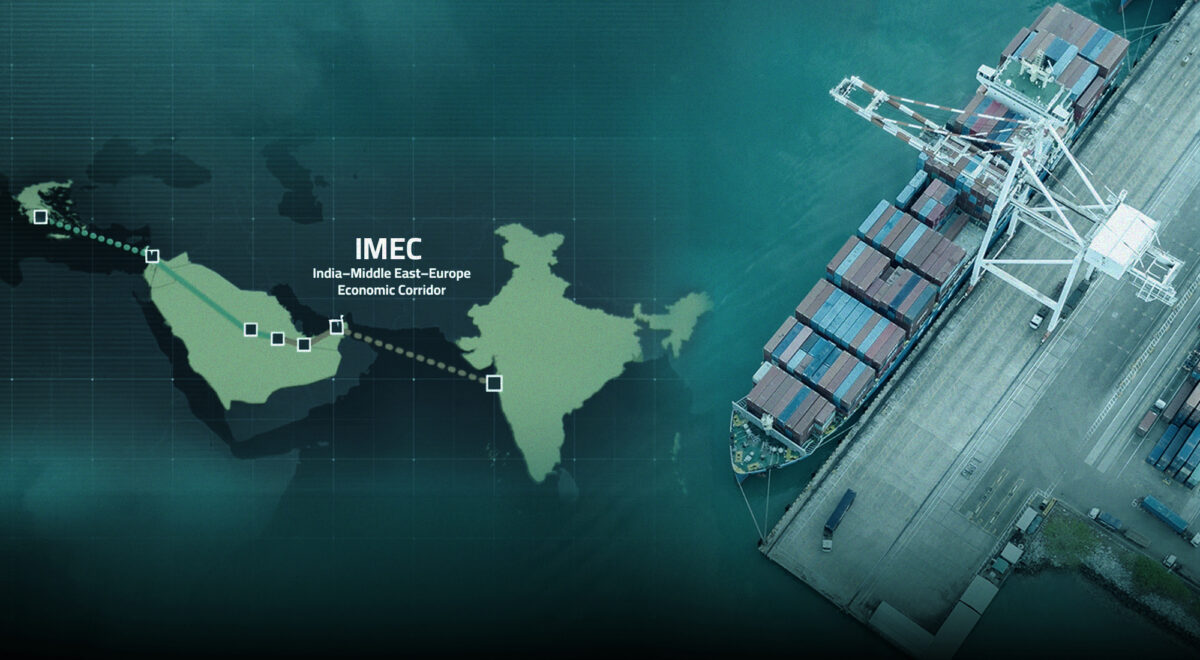
It seems that the US Tariff bonanza has set off the political reshaping of the Indian Middle East Europe Economic Corridor, running for India to Marseille and Trieste, forced by the US to counter the Belt and Road Initiative of China. IMEC represents the revival of a dominant Eurasian trading route that thrived from antiquity to the 16th century. Documents such as the Periplus of the Erythraean Sea, written in Greek in the 1st century CE, attest to maritime trade between India and the Greco-Roman world. This sea and overland linkage functioned as part of the Silk Road until Portugal’s conquest of India, when Vasco da Gama became the first to sail from Europe directly to India by rounding Africa’s Cape of Good Hope.
IMEC’s multimodal design (including rail, port, and pipeline infrastructure) supports the use of green hydrogen in powering the corridor. Green hydrogen is anticipated to eventually have a competitive advantage (particularly when converted from green ammonia) for industrial power and transportation
fuel for long-haul trucking, aviation, railways, and shipping. By the mid-2030s, hydrogen refueling hubs along IMEC (e.g., NEOM and Yanbu) with facilities in the UAE, Saudi Arabia and further into Greece and the rest of Europe providing ammonia or methanol for ships and hydrogen fueling stations for freight trains or trucks on new rail links.