
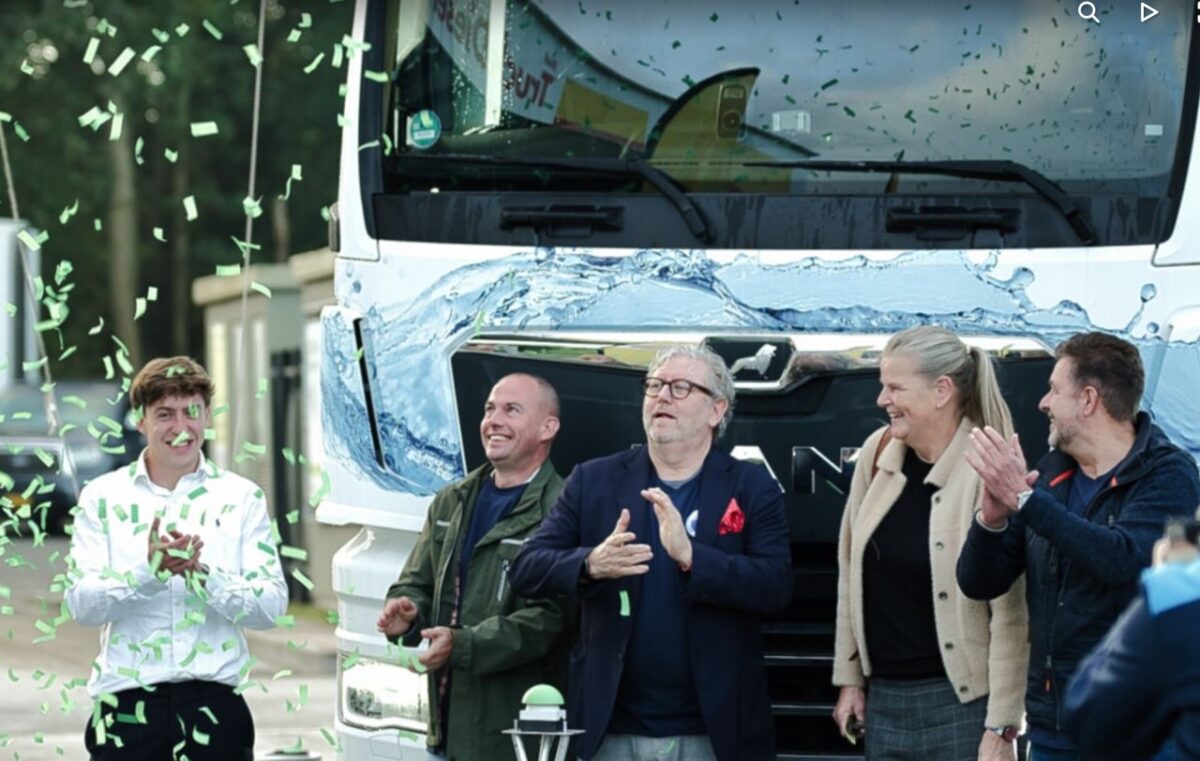
As a MAN hTGX hydrogen powered truck of Green Planet’s filling station in Pesse in the Netherlands, demonstrated that a truckload can bridge a trip from Northern Netherlands to Barcelona, the German government on October 19, 2026, decided that falling hydrogen demand needed a Carbon Credit for Difference boost of 1,5 bln Euro. This announcement came after the EU Council of October 15-16, 2026, built a shield around key EU Industry to face off Chinese competition.
Especially European Industrial demand for hydrogen has been falling, as the EU RED 3 Directive requires 42% of industrial hydrogen to be renewable by 2030, and only a few member states have transposed it into national law. Regulation-driven demand now looks set to reach only ~2.8 Mt/year versus the ~1.1 Mt shortfall already identified as Europe’s core hydrogen-consuming industries — chemicals, fertilizers, steel — are being hit by high energy costs, weak demand, and global competition.
These challenging conditions lifted the start of the traditional Hydrogen Octoberfest in Hamburg, the Hydrogen Technology World Expo, into true autumn colours. Over 1000 exhibitors, including Carbon Capture and Storage suppliers demonstrated that they will be the trailblazers for the future of all colours hydrogen in Europe. As at the Hydrogen Week in Brussels from October 26-29, 2026, Chinese exhibitors were discouraged to participate in Hamburg as well. The Hydrogen Europe Business Organisation therefor puts “concrete resilience” first, inviting its new president Miguel López, CEO of Thyssenkrupp, on the floor to confirm his commitment to European H2 production.
Dan Jørgensen, EU Commissioner for Energy, in the Opening session referred to the four week consultation, launched on October 26, 2026 on the upcoming review of the EU Hydrogen Strategy, to face decreasing demand. As Japan is the partner country of this edition of Hydrogen Week, Takehiko Matsuo, special advisor to Ministry of Economy, Trade and Industry, explained that also Japan is concentrating on demand along its transport corridors and stressed the importance of Contracts for Difference to secure demand and, imports (ammonia) from i.e. India. Anil Kumar Taparia CEO of ACME Cleantech demonstrated that India within 5 years, has become an ammonia exporter as part of India’s green hydrogen mission, and marveled at the speed with which Indian H2 regulatory conditions have improved. Japan’s IHI Corporation CEO Kensuke Yamamoto indicated that India proved a reliable partner, to support the transition in coal plants to green hydrogen. As China announced more stringent export rules for its critical tech companies.
Céline Gauer the new EU Director General for Energy stressed again the importance of the public consultation on the new Hydrogen Strategy that will be key to refocus H2 developments. Beata Grota, VP of Bosch Engineering and Power Solutions asked for a framework to facilitate demand and a fast implementation of the Industrial Accelerator Act, more importantly its ambition to create Lead Markets, based on Public Procurement & Support Preferences for “Made in EU” (or trusted partner) and low-carbon rules for public spending and subsidies targeting: the automotive sector, requiring zero-emission vehicles and electric vehicles to meet local assembly and component-origin thresholds, as well as energy-intensive materials like steel, cement/concrete, and aluminium.
(Photo courtesy of Green Planet, Pesse)