
On July 17, 2026, the last day before EU’s summer break, the EU Commission launched its long awaited Electrification Action Plan to make Europe the first electro-powered continent, and “support” EU’s industry in is clean transition and electrification by slowing the reduction of free carbon credits….. 70% of EU electricity is now generated from homegrown clean energy sources, but the electrification rate of energy demand is not rising above 23% over the past decade.
Therefor, as part of its post-2030 Energy Union package an indicative electrification target of 46% by 2040 will be assessed by the Commission, potentially lowering the EU’s fossil fuel import bill by €260 billion per year by 2040.
Since 2005, the EU Emissions Trading System (ETS) has generated more than €270 billion in revenues, helping Europe cut emissions by 50% in the sectors it covers. However global political shifts and ongoing industrial challenges will require an ETS carbon credit reset by introducing a Linear Reduction Factor (LRF) of 3.7% (instead of 4,3%) for 2031-2035 and 1.7% for 2036-2040. Up to 2% international credits will allow decarbonisation projects abroad from 2036-2040 as emission reduction in Europe will become more difficult. The Industrial Decarbonisation Bank will provide €100bn funding going towards industrial decarbonisation across Europe at scale. An’ ETS Investment Booster of 30 bln will be available before 2030 as the first phase of the Banks activities.
On June 26, 2026 a number of EU energy ministers, storage developers and manufacturers, renewable energy developers, energy-consuming industries and financial institutions were rallied by the EU Commission around the first-ever EU tripartite agreement on energy storage. to accelerate the deployment of storage, to speed up a secure and flexible electricity system. As part of the agreement, 22 EU Member States committed to pledges for up to 30-35 GW of storage capacity over the next two years.
The Commission points to the need to expand EU renewable capacity to reduce dependencies foreign fossil fuel markets and reinforce security of supply and therefor the need for storage to optimize EU’s energy system. Commitments under the tripartite agreement on energy storage include:
1. Visibility of storage activities: yearly estimates of projects and volumes. See first list of examples
2. Member States committed to enable the National Regulatory Authorities to set or approve cost-reflective and non-discriminatory network tariffs that stimulate flexibility and provide financial support for energy storage rollout and manufacturing through national and EU funding.
3. The Commission will support EU Member States in creating funding schemes for storage and help the decarbonisation of energy-consuming industries, including through the Industrial Decarbonisation Bank
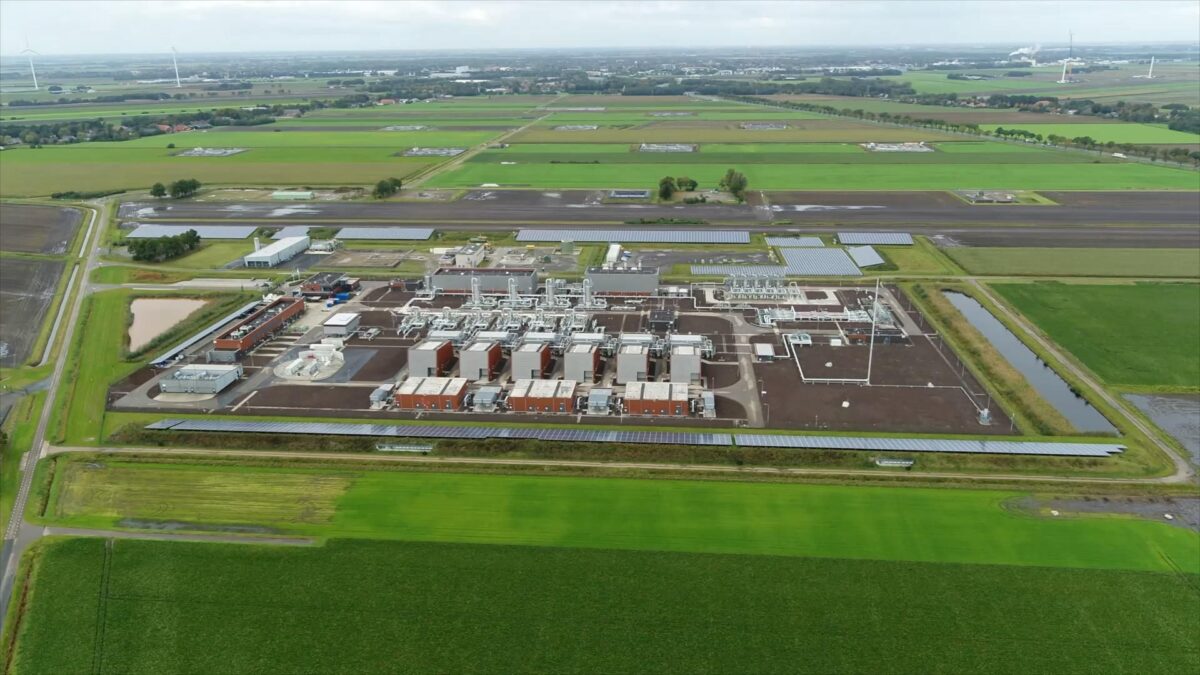
On July 7, 2026, the Dutch government allocated EUR 450 million to support the Zuidwending hydrogen storage facility, in which the Dutch Gas TSO, Gasunie, will develop four underground caverns, with a total capacity of 6,000 tonnes of hydrogen. The first of these storage units is projected to commence operations in 2031. The selection of the Zuidwending location is strategic; it benefits from existing underground gas storage infrastructure and is ideally situated for future connections to the Netherlands’ planned national hydrogen pipeline network. Theproject in Zuidwending aims to not only build infrastructure for storage but also to support the strategic demand this storage will serve in the future, although this demand has not been specified.
Photo: Courtesy of HyStock